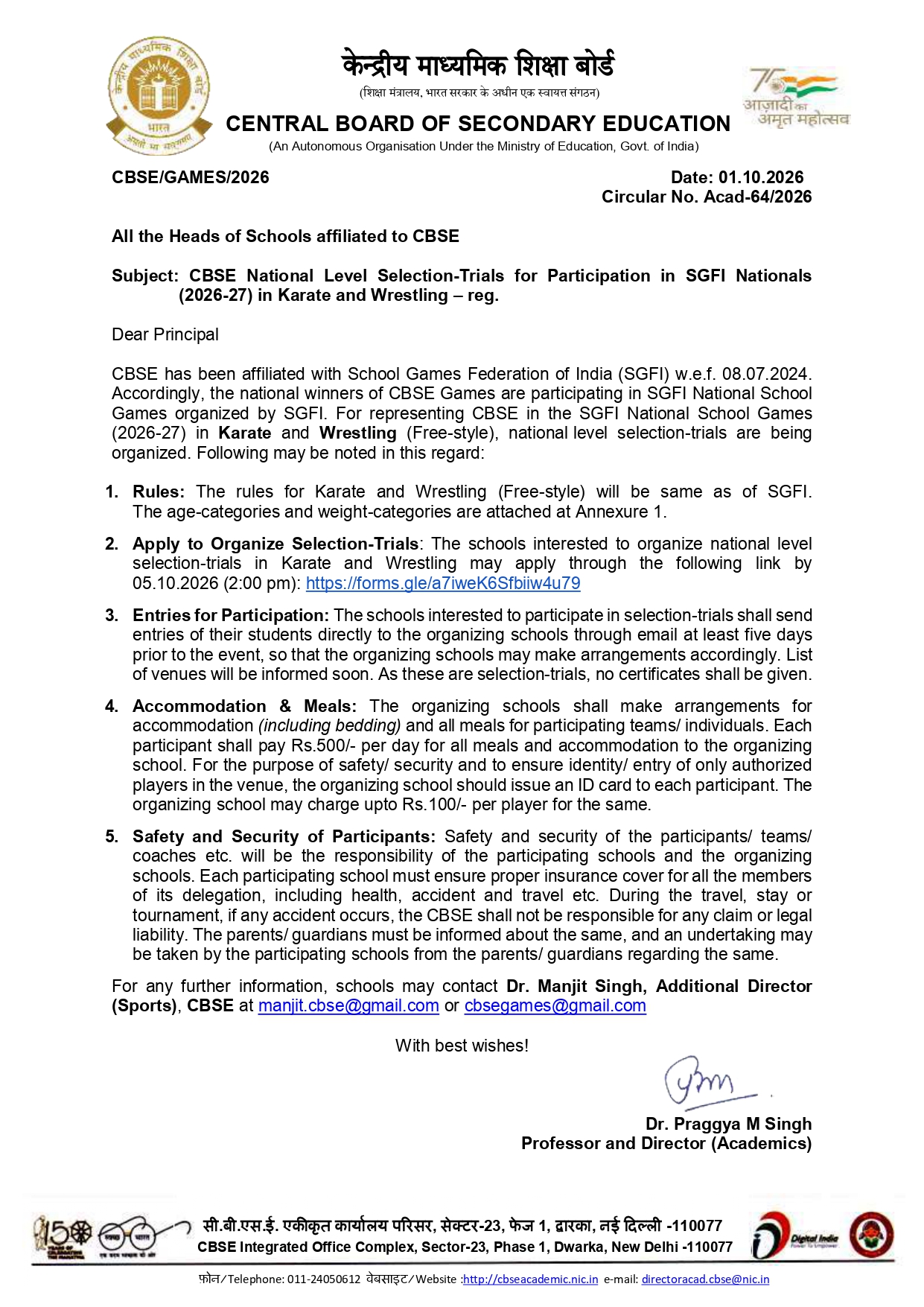

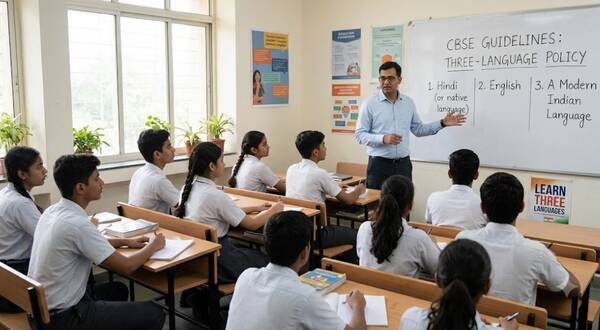
CBSE Issues Guidelines on the three-language policy
New Delhi, 29-06-2026
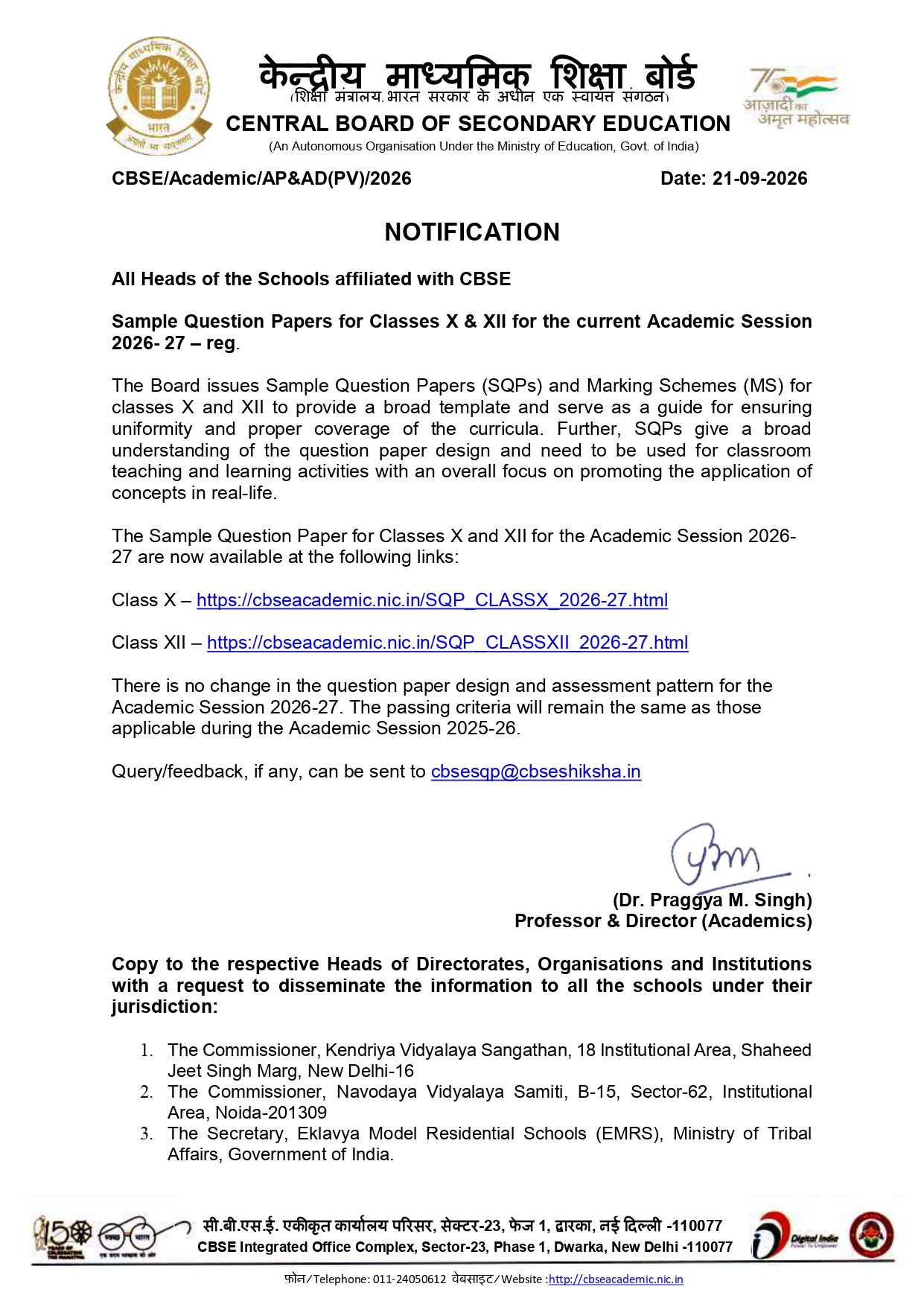
CBSE Issues Guidelines on the three-language policy
The current batch of class X will not have to follow the new language policy
For the current batches studying in class VII, VIII and IX would not be required to give board examination in third language when they progress to Class X
For the current batches of class VII, VIII, IX who had already taken 2 foreign languages would continue with the same with one additional native Indian Language (Bhartiya Bhasha)
The grade appropriate resource material would be made available in a time bound manner
Language learning will be meaningful, engaging and enriching to contribute holistic development
The National Education Policy 2020 recommends learning three languages, with at least two of the three languages being native to India.
While CBSE aims to equip learners with competence in multiple Bhartiya Bhashas (native Indian languages) and promote the vibrancy of language learning, it is equally committed to ensuring that the process of learning and growth remains balanced.
The objective is to make language learning a meaningful, engaging, and enriching experience that contributes to the holistic development of every learner.
Further, the introduction of the third language (R3) in Secondary Stage (Class IX and Class X) is an extension of language learning from the Middle Stage (Classes VI to VIII).
In pursuance of the above objectives, it is considered necessary to issue guidelines regarding the implementation of the Language Policy in CBSE-affiliated schools with effect from the Academic Session 2026–27.
Scheme
- Two out of the three languages opted for must be Bhartiya Bhashas.
- A non- native language can be opted for as the third language (R3), provided that the other two are Bhartiya Bhashas.
- Relaxations during the transitional period and exemptions have been given below.
A. Students in Class X (2026–27)
- It is reiterated that there will be no change for students who are in Class X during 2026–27, and they will continue with the old system of two languages.
- No third language is required to be taken by this batch.
B. Students who are in Class IX (2026-27)
- Every student in Class IX would study three languages. Out of these three languages, at least two would be Bhartiya Bhashas.
Examples of Bhartiya Bhashas: Hindi, Sanskrit, Tamil, Telugu, Kannada, Malayalam, Marathi, Bengali, Punjabi, Gujarati, Odia, Assamese, etc.
Examples of non-native languages: English, French, German, Arabic, Spanish, etc.
The following situations will help clarify the doubts, if any, in the minds of students in Class IX.
Situation 1: You already study two Bhartiya Bhashas.
- Example: Hindi + Tamil
You can choose as your third language: Another Bhartiya Bhasha
OR
A non-native language such as English or French.
Situation 2: You study one Bhartiya Bhasha and one non-native language
- Example: Tamil + English
You can choose any Bhartiya Bhasha as third language (R3).
Situation 3: You study two non-native languages
- Example: English + French
As a special one-time relaxation for students who are already in Class IX during 2026-27, you may continue with those two non-native languages and need to add one Bhartiya Bhasha as your third language (R3).
Important points for Class IX students (2026-27)
- Assessment: The third language (R3) will be assessed by your school through an internal school- based assessment only.
- There will be no CBSE Board examination for this third language when this batch progresses to Class X 2027-28.
- CBSE and NCERT will provide grade-appropriate learning resources to help students learn the third language.
C. Students who are in Class VII or VIII in 2026-27
- When you reach Class IX and X, you will continue studying three languages, with two of them being Bhartiya Bhashas.
Relaxation
- For the current batch of Class VII (2026-27) and Class VIII (2026-27), the students who have already selected and started studying 2 non-native languages need to study 01 additional Bhartiya Bhasha and continue the same till class X.
Assessment
- The third language (R3) will be assessed by the school through an internal school-based assessment only. There will be no CBSE Board examination for this third language when these batches progress to Class X.
D. Class VI 2026-27
- Out of the three languages, two would be Bhartiya Bhashas for this batch and onwards.
- When this batch and the subsequent Class VI batches progress to Class X, they shall take the Board examination of R3.
- The dedicated R3 textbooks for class VI in 22 scheduled Bhartiya Bhashas are being made available on www.ncert.nic.in
E. General Exemptions
The following categories are exempted from the three-language policy:
- i. Children with Special Needs (CwSN): Relaxations and exemptions from the compulsory third language requirement are granted as per the Rights of Persons with Disabilities (RPwD) Act, 2016.
- ii. Schools outside India: Full exemption from a native Indian Language as third language (R3) is provided to all CBSE schools situated outside India.
- iii. Foreign students returning to India are also exempted from studying a native Indian language as third language (R3)
F. In the case of parents/guardians migrating to another state, the student may continue with the existing combination of languages they opted for as R3 in Middle Stage in Class IX also. In such cases, schools must necessarily provision adequate resources to support the student’s choices.
G. Human Resources (teachers): Flexible Staffing provisions have been provided. Schools are required to engage existing teachers (with functional proficiency), retired teachers, postgraduates, or use Sahodaya clusters (inter-school sharing) and virtual/hybrid teaching.
H. The Board has been taking measures to promote positive learning experiences for students, which include innovative and joyful learning resources, focus on conceptual clarity, not on rote learning, and maintaining continuous assessment practices incorporating examination reforms. The Board reiterates that these implementation guidelines are issued to align with NEP 2020 while protecting student interests. No student shall be disadvantaged due to this alignment. The focus remains on joyful, meaningful language learning, not on examination. CBSE will endeavor to hand-hold schools, in the best possible manner, through additional learning resources (as required) and capacity building in the implementation of NEP 2020. Schools are requested to communicate these provisions positively to teachers, students, and parents, emphasizing the long-term benefits of multilingual proficiency and cultural rootedness.
Professor & Director (Academics)
Source: Click here to view/download PDF
नोट :- हमारे वेबसाइट www.indiangovtscheme.com पर ऐसी जानकारी रोजाना आती रहती है, तो आप ऐसी ही सरकारी योजनाओं की जानकारी पाने के लिए हमारे वेबसाइट www.indiangovtscheme.com से जुड़े रहे।