

8th Pay Commission: Expected Salary Increases for Government Employees and Pensioners
As the 7th Pay Commission approaches its conclusion in December 2025, over 11 million central government employees and pensioners are eagerly anticipating the introduction of the 8th Pay Commission, which may offer a substantial boost in salaries and pensions. Speculation surrounds whether this new commission will take effect in January 2026, prompting a closer examination of the expected timeline, potential pay revisions, and future implications.
What Is the 8th Pay Commission Expected to Deliver?
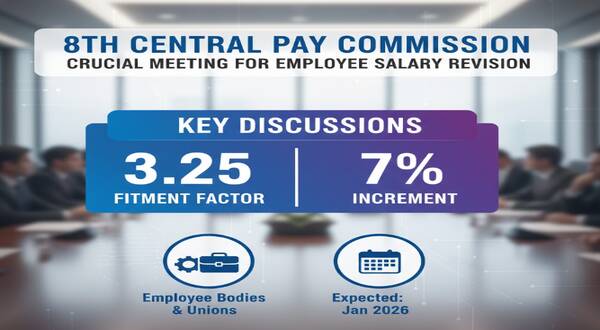
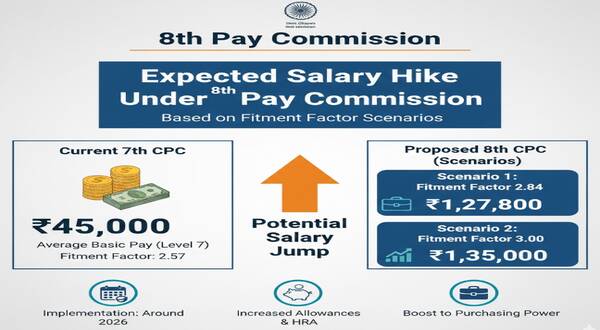
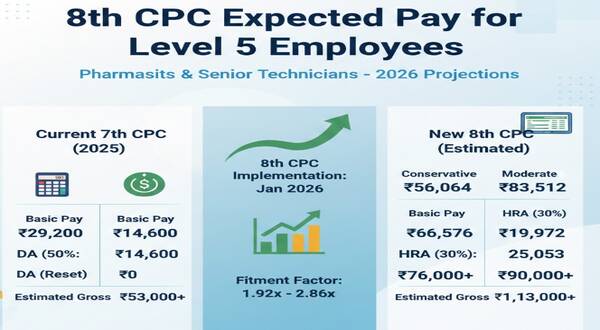
According to a recent report by Ambit Capital, the 8th Pay Commission is anticipated to increase salaries and pensions by 30–34%. This significant adjustment could greatly enhance the financial well-being of central government staff and retirees. For example, an employee currently earning a basic salary of ₹50,000 might experience a conservative salary increase of 14%, while more favorable scenarios could see raises as high as 54%, particularly when considering possible increases in Dearness Allowance (DA).

Currently set at 55%, the DA is projected to rise to 60% by the end of 2025, providing additional scope for salary adjustments under the new commission.
Why January 2026 May Be Too Soon
Despite the mounting expectations, news reports suggest that the implementation of the 8th Pay Commission before FY 2026–27—between April 2026 and March 2027—appears unlikely. Although the government announced the formation of the commission in January 2025, foundational steps such as appointing a chairman and member panel and publishing terms of reference remain unfulfilled. Without these initial actions, the commission cannot commence its formal review or make recommendations.
Historical context reveals that the 7th Pay Commission was established in February 2014 and took nearly 18 months to finalize its recommendations, which were subsequently reviewed and accepted before being implemented in January 2016.
What Will Change Under the 8th Pay Commission?
If the 8th Pay Commission is implemented as anticipated, it is expected to introduce several key changes:
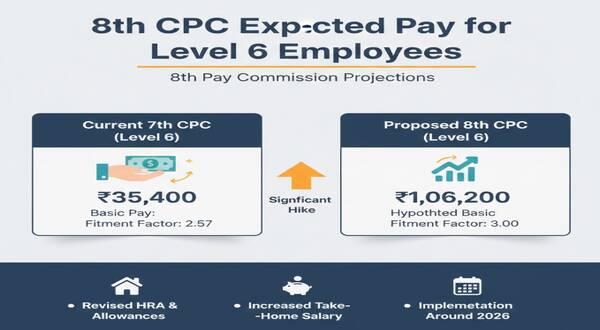
- Revised Basic Pay Scales: Employees will benefit from updated pay structures that reflect current economic conditions.
- Dearness Allowance Alignment: The DA will be adjusted to better align with inflation rates, ensuring that employees maintain their purchasing power.
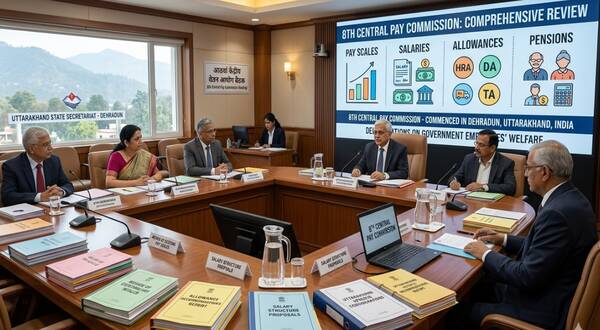
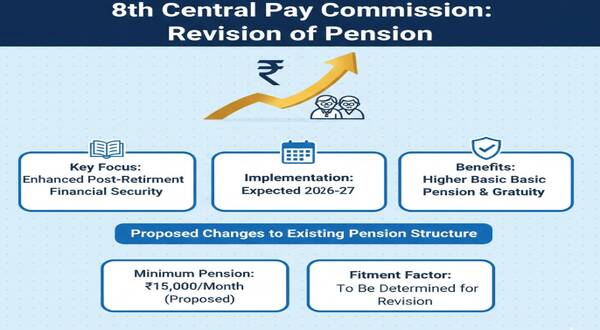
- Pension Revisions: Retired employees will see their pensions adjusted according to the new pay scales, improving their financial security.
These changes will not only influence individual salaries but will also have broader implications for government fiscal planning and inflation management.
Conclusion
While the 8th Pay Commission holds the promise of significant financial advantages for central government employees and pensioners, its implementation timeline remains uncertain. Given the current developments and reports, a rollout before FY 2026–27 seems improbable. Employees are encouraged to stay informed about official announcements and plan their finances accordingly, as any future salary revisions will depend on formal approvals, budgetary considerations, and overall economic conditions.
नोट :- हमारे वेबसाइट www.indiangovtscheme.com पर ऐसी जानकारी रोजाना आती रहती है, तो आप ऐसी ही सरकारी योजनाओं की जानकारी पाने के लिए हमारे वेबसाइट www.indiangovtscheme.com से जुड़े रहे।